
In many group chats, emoji reactions are quietly replacing some full replies, not necessarily because people have nothing to say, but because reactions let conversations keep moving without reopening them.
Someone sends a long update in the group chat. Maybe it’s a project timeline. Maybe it’s dinner plans. Maybe it’s a friend saying they finally got home after a rough week.
A few years ago, this probably would have produced a stack of replies.
“Got it.”
“Sounds good.”
“Happy for you.”
“LOL.”
Now the response is often six tiny emojis lined up under the message.
Thumbs up.
Heart.
Laughing face.
Fire emoji.
Maybe a salute emoji if it’s a work chat.
And then everyone moves on.
In a lot of group chats now, reactions seem to be replacing certain small conversational turns. Mostly in places where people once sent short acknowledgment messages that didn’t add much new information anyway.
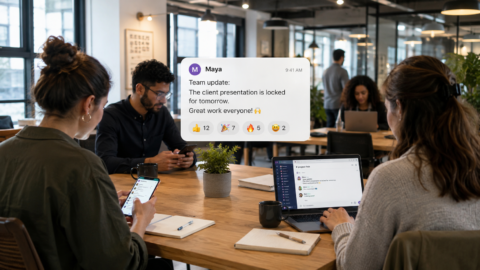
In work chats, reactions help prevent channels from becoming unreadable. A manager posts an update and instead of twenty people typing “thanks” or “received,” everyone taps the thumbs up icon.
The message gets acknowledged without creating twenty new notifications.

Something similar happens in friend groups too.
Someone shares vacation photos.
Everybody reacts.
Nobody really replies.
A friend says they passed an exam.
The chat fills with hearts and fire emojis.
Then the conversation shifts to something else.
The emotional signal still gets delivered, but with very little conversational expansion.
Over time, people have also developed shared meanings around different reactions.
A thumbs up often means:
I saw this.
A heart can mean:
I care, even if I don’t have energy for a full response right now.
A laughing emoji can mean:
I get the tone.
In some chats, reactions are basically conversational shorthand now.
A reaction lets someone acknowledge the conversation without fully re-entering it.
That matters in large chats where conversations never completely stop. Family groups. Office channels. College friend groups. Gaming chats.
A lot of them carry a quiet expectation that you should acknowledge things eventually.
Reactions lower the effort required to do that.
You can acknowledge.
Participate.
Signal tone.
Show support.
Confirm you saw the message.
All without restarting the conversation again.
Part of the appeal is probably notification control.
A written reply pulls everybody back into the chat.
A reaction usually doesn’t.
That difference becomes especially noticeable in workplace chats where dozens of people technically need to respond, but nobody wants the channel flooded with repetitive messages.
Emoji reactions solve that problem almost perfectly.
But the behavior also spills into more personal conversations.
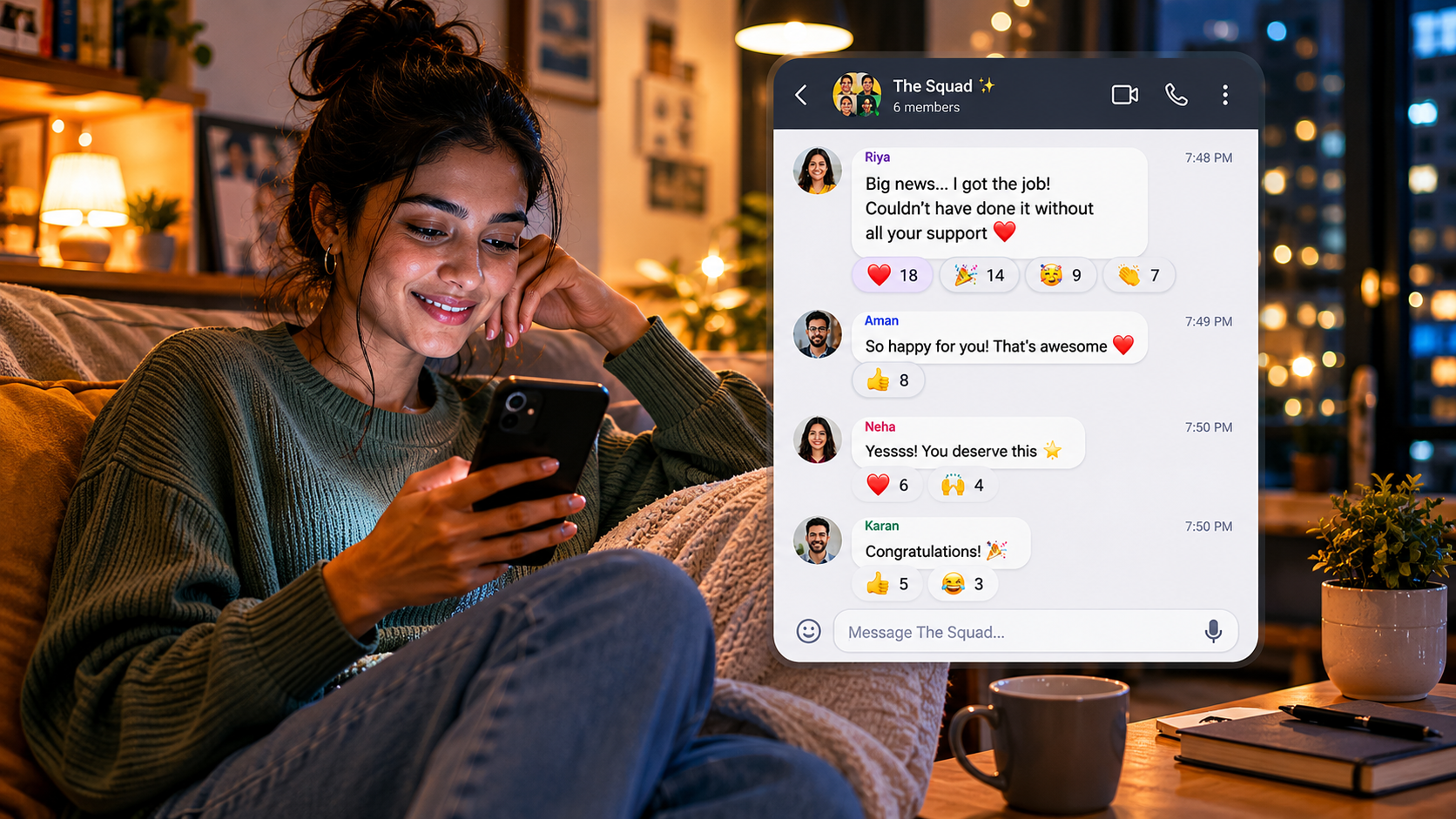
Sometimes somebody shares emotional news and mostly receives reactions back.
Hearts.
Sad faces.
Prayer hands.
Maybe one short reply underneath everything else.
That doesn’t necessarily mean people care less.
Sometimes reactions probably increase responsiveness because the effort barrier is lower. Somebody commuting home, multitasking at work, or exhausted at the end of the day can still acknowledge the message immediately.
Whether they come back later with a fuller reply is a different question.
And most people recognize the emotional difference instinctively.
There are moments where a heart reaction feels warm and complete.
There are other moments where it can feel slightly thin, especially when somebody hoped the conversation might continue a little longer.
A lot depends on the relationship, the situation, and what the sender expected after sharing something.
People also read tone through reactions now almost automatically.
A thumbs up from one coworker can feel neutral.
From another, it can feel cold.
A laughing emoji can soften criticism, acknowledge awkwardness, or sometimes mean:
“I saw this but I don’t really know what to say.”
A growing amount of conversational rhythm now runs through these tiny signals.
And unlike older internet habits that required active posting, reactions allow lightweight participation while staying partially disengaged at the same time.
Someone can stay visibly active in a group for days without sending many actual messages at all.
That may be part of why reactions fit so naturally into modern chat behavior.
A lot of people are managing too many conversations simultaneously now.
Too many group chats.
Too many notifications.
Too many places where silence can accidentally look rude.
Reactions reduce some of the maintenance cost of staying socially present across all of them.
In many situations, they probably do make conversations function more smoothly.
They keep chats readable.
They reduce repetitive replies.
They allow acknowledgment without demanding everyone else’s attention again.
But they also quietly change what counts as participation.
Sometimes being “present” in the conversation now simply means pressing one small button so other people know you were there.