
Many digital systems still rely on folders, menus, and hierarchies. Increasingly, though, people reach them through search first, using cues instead of routes to get where they want to go.
You search for an app that’s already on your phone.
You search for an email you received yesterday.
You type the name of a setting instead of opening the settings menu.
You open a streaming service and search for a show that’s already somewhere on the home screen.
In each case, the destination is known.
The search box is being used as navigation.
The interesting observation isn’t that people can’t find these things any other way. In many situations, search has simply become the route people reach for first.
It’s still difficult to know whether this behavior is becoming more common over time or whether it feels more visible because modern interfaces increasingly place search at the center of the experience. Either way, it’s now a familiar part of everyday digital life.
From Location Memory to Cue Memory
A traditional navigation model often depended on remembering location.
You remembered where something lived, moved through the structure, and retrieved it.
That approach fit environments built around folder trees, bookmark collections, menu paths, and carefully organized files.
Many digital systems now support a different route.
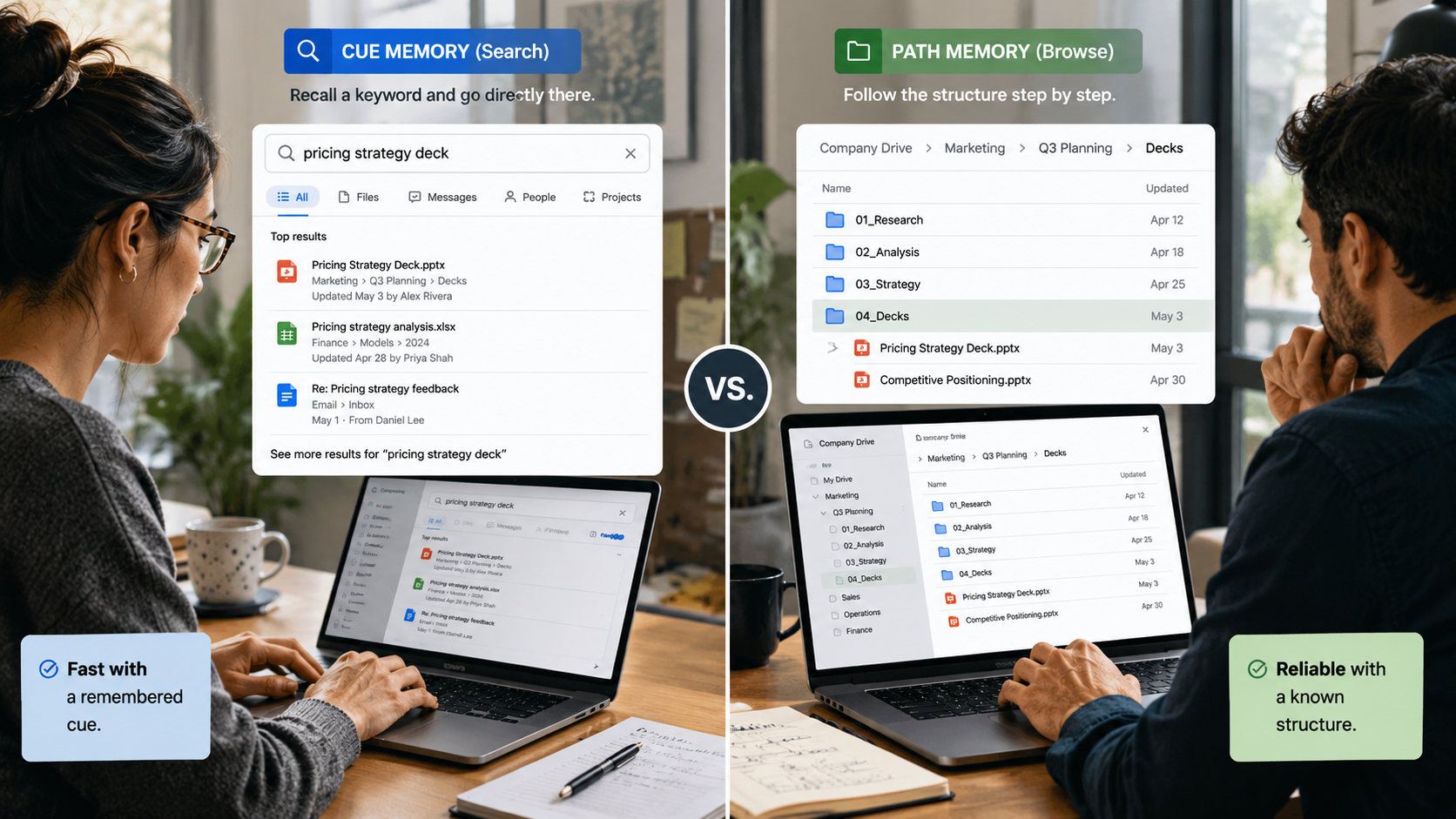
Instead of remembering location, users can often remember a cue.
A name. A keyword. A fragment of a title. A likely search term.
The process becomes:
Remember cue → Search → Retrieve
The underlying information may still live inside a hierarchy, but reaching it no longer requires remembering the hierarchy itself.
Someone might know exactly what they’re looking for while having only a vague sense of where it exists inside the system.
The destination remains clear. The route becomes optional.

The Search Layer Above the Structure
This pattern appears across operating systems, browsers, cloud storage platforms, workplace software, streaming services, and phone interfaces.
Files still sit inside folders.
Settings still belong to menus.
Content still exists within categories and systems.
What changes is how people reach them.
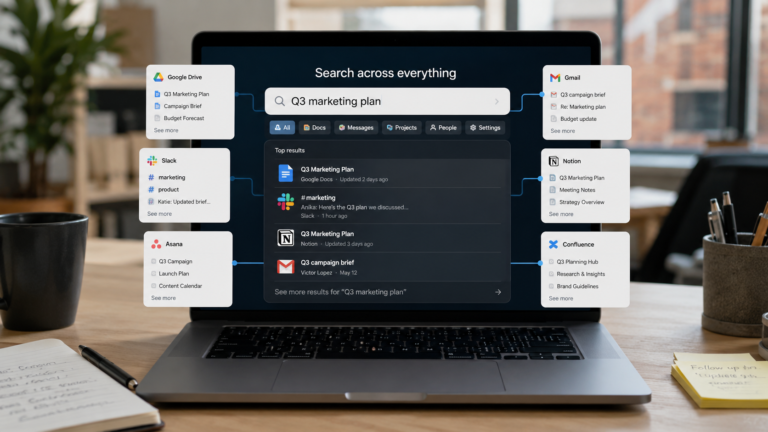
Search increasingly functions as an access layer above the architecture beneath it. Instead of moving through the structure directly, users can often jump to the destination with a few words.
In practical terms, the requirement shifts.
The question becomes less “Where is this?” and more “What should I type?”
That doesn’t happen everywhere. Complex enterprise software, specialist tools, administrative systems, and procedural workflows often still reward a strong understanding of how information is organized.
But across many everyday digital environments, navigation increasingly starts with retrieval rather than route-following.
A Different Kind of Digital Competence
Older forms of digital competence often emphasized file organization, folder conventions, menu familiarity, and knowing where things belonged.
Many modern environments also reward a different set of skills.
Knowing useful search terms.
Recognizing likely keywords.
Creating names that are easy to retrieve later.
Remembering cues instead of paths.
That shift changes small habits around saving, naming, and retrieving information.
Someone saving a document may choose a clearer filename because they expect to search for it later rather than browse through folders. A user looking for a rarely used setting may type part of its name into search instead of learning where it sits inside a menu system.
The same pattern appears elsewhere. People often remember fragments rather than locations—a few words from an email subject line, part of an app’s name, or a keyword associated with a file. The cue becomes the navigation tool.
This isn’t a replacement of one skill with another.
Different systems reward different behaviors.
Most people move between both approaches without thinking much about it.
They search for a document, then use folders once they arrive in the correct workspace.
They search for a setting they rarely use while navigating directly to tools they open every day.
The behavior changes depending on the task.
Many digital systems remain organized as hierarchies.
What has changed is how people often experience them.
The structures are still there, but everyday navigation increasingly begins with retrieval rather than route-following.
In many environments, knowing a useful cue is often enough to reach a destination.
The adaptation is not the disappearance of structure. It’s a shift toward cue-based navigation, where remembering what something is called often matters more than remembering where it lives.