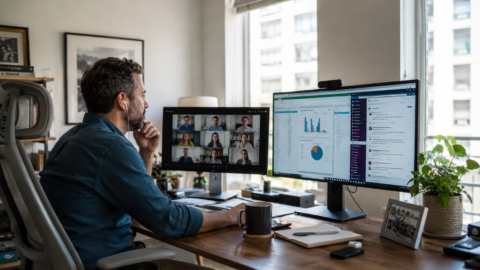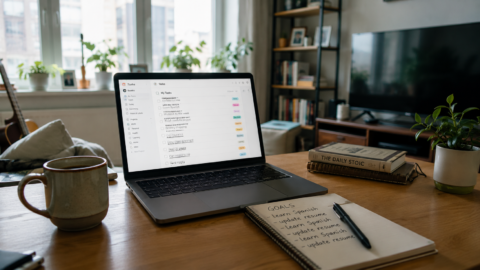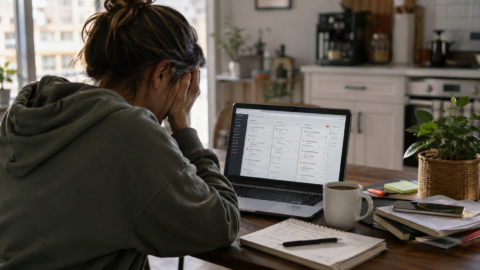


For some people working from home, a short change of environment can be enough to break repetitive focus fatigue without turning it into a productivity system.
Cafe work has started to feel less like a lifestyle choice and more like a short-term coping habit for some workers.
People are not always going to cafes because they love remote-work aesthetics or the idea of “working from anywhere.” Sometimes they go because their current environment stops feeling workable after a few hours.
Sometimes it’s the kitchen sitting five feet away with unfinished dishes. Sometimes it’s the silence of being alone all day. Sometimes it’s a noisy office where everyone is half-talking through meetings nearby.
Sometimes it’s just the feeling that builds after staring at the same wall for too many afternoons in a row.
So the laptop leaves the house.
Not permanently. Not dramatically.
Just long enough to finish the task.
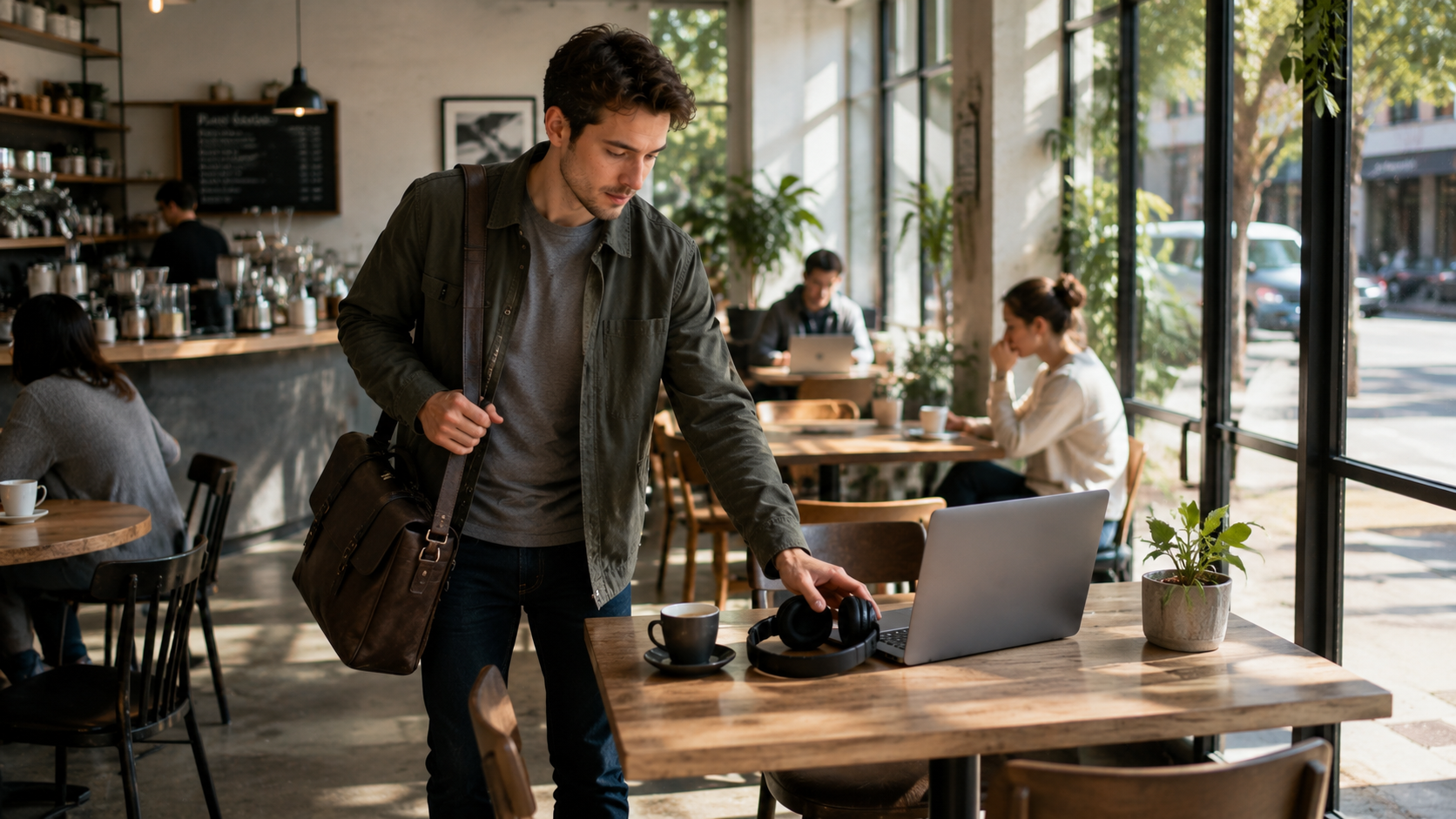
You can see the pattern in small behaviors. People arriving late morning instead of early. Noise-canceling headphones going on immediately. One drink lasting three hours. Someone struggling with the same document at home, then finally making progress after changing locations.
For some workers, the trip itself matters almost as much as the workspace.
The cafe is not always more productive overall. Cafes can be distracting too. But the change of environment can interrupt whatever mental loop was happening before.
A lot of the language around this stays surprisingly simple:
“I just needed to get out of the house.”
“I couldn’t focus at home today.”
“I needed somewhere to lock in for a bit.”
People rarely describe it like a serious productivity system. It sounds more temporary than that. More like using a different environment to reduce the mental weight of a task.
There is also a middle ground to this that feels increasingly familiar.
Working from home solved certain problems for many people, but it also blurred together things that used to stay separate. Laundry exists during work hours now. Packages arrive during meetings. The couch stays nearby during difficult tasks. Small household responsibilities remain visible all day.
Meanwhile, offices are not always functioning as focus spaces either. Some workers describe returning to the office only to spend most of the day wearing headphones anyway.
So the cafe becomes a temporary third option.
Not home. Not fully office. Just somewhere with enough background activity to make concentration easier for a few hours.
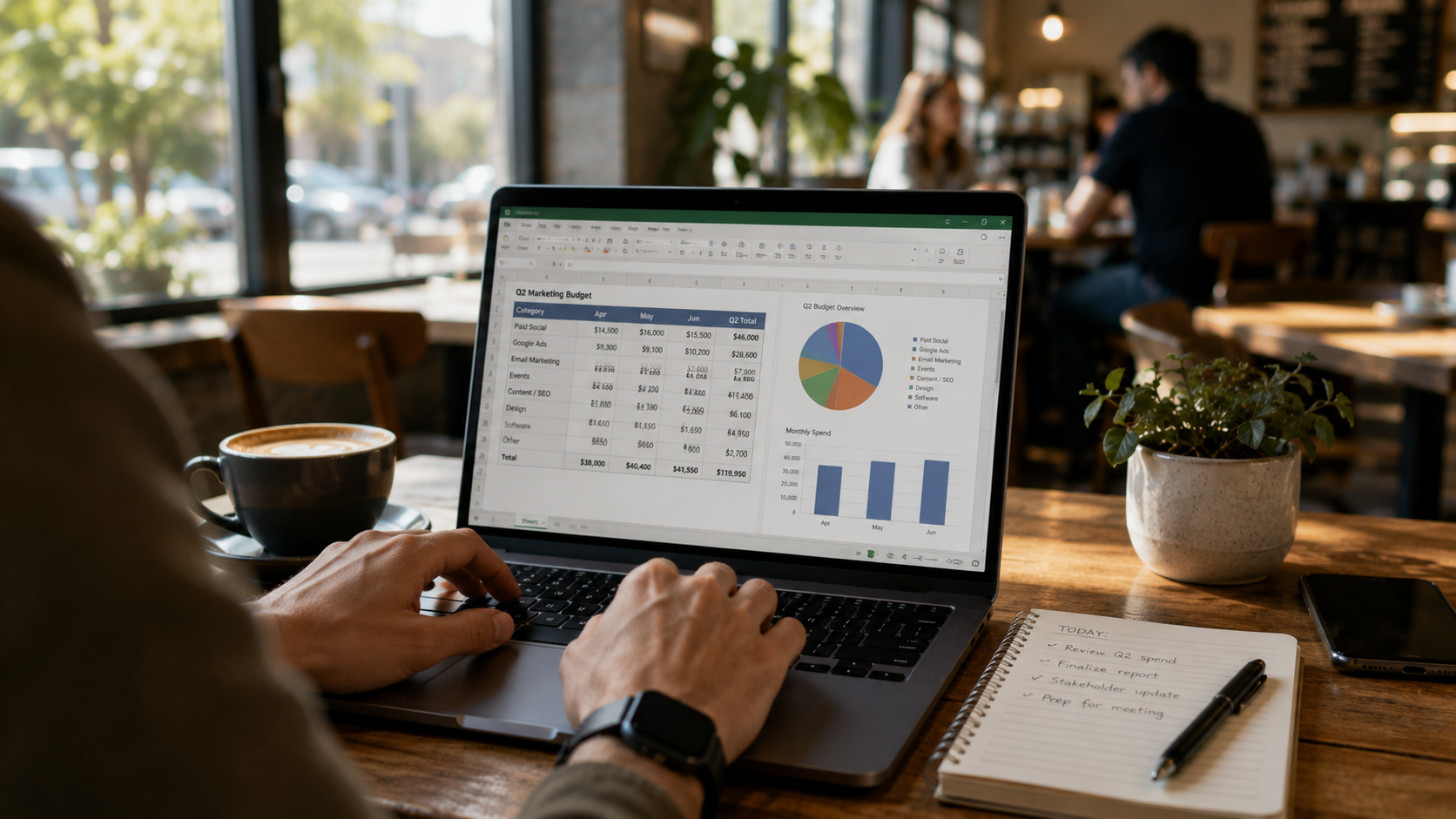
For some people, the ambient noise matters. Cups clattering. Espresso machines running. Strangers talking nearby without needing anything from you. The environment creates a feeling of structure without direct supervision.
Others seem to use cafes less for stimulation and more for separation. The moment they arrive, home responsibilities temporarily stop existing because they are physically somewhere else.
One recognizable part of this behavior is how specific the trips often are.
People are not always relocating for entire workdays. Sometimes it’s one difficult spreadsheet. One writing assignment. One overdue presentation. One afternoon where concentration feels harder to maintain at home.
And the results are inconsistent.
Some people genuinely get more done in cafes. Others admit the first 45 minutes mostly feel productive because the environment is new. Eventually the background noise becomes distracting too. Some end up spending more money while accomplishing roughly the same amount of work.
But many still repeat the routine.
Partly because the outing itself creates momentum.
Packing a bag, walking somewhere, ordering a drink, and opening a laptop around other people can sometimes interrupt the stuck feeling that builds after too many repetitive work-from-home days.
Not permanently. Just for a while.
Many people do not seem to treat cafes as magically better workspaces overall. They use them more like situational tools for certain moods or mental states.
The recognizable part is how common this behavior now feels.
You walk into a cafe on a weekday afternoon and immediately notice the mix: students, hybrid workers, freelancers, people escaping noisy apartments, people trying to finish one task they have been avoiding all morning.
Nobody announces any of this out loud.
But the behavior feels familiar.
Sometimes the cafe visit is less about the cafe itself and more about borrowing a different atmosphere long enough to think clearly again.