
Many people now use AI to make communication faster, but emotionally vulnerable messages still tend to get manually softened, shortened, or rewritten before they’re sent.
Many people now use AI for things they used to procrastinate on.
Cleaning up meeting notes.
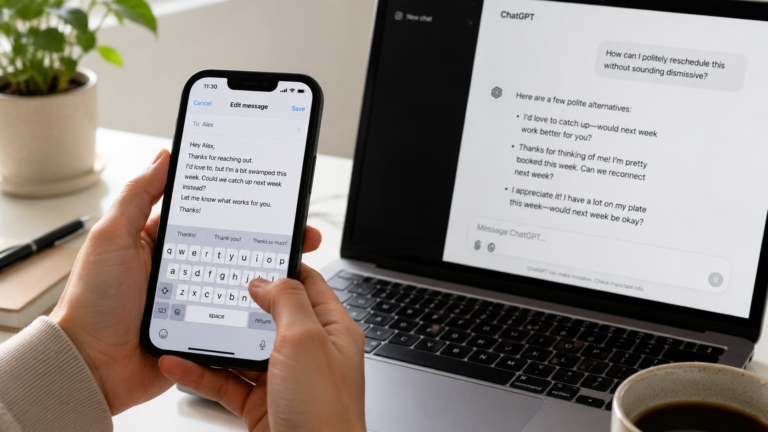
Rewriting awkward emails.
Turning messy thoughts into bullet points.
Drafting scheduling messages.
Summarizing documents they probably were not going to fully read anyway.
For a lot of users, the process becomes automatic.
- Paste.
- Generate.
- Send.
But some messages still seem harder to hand over completely.
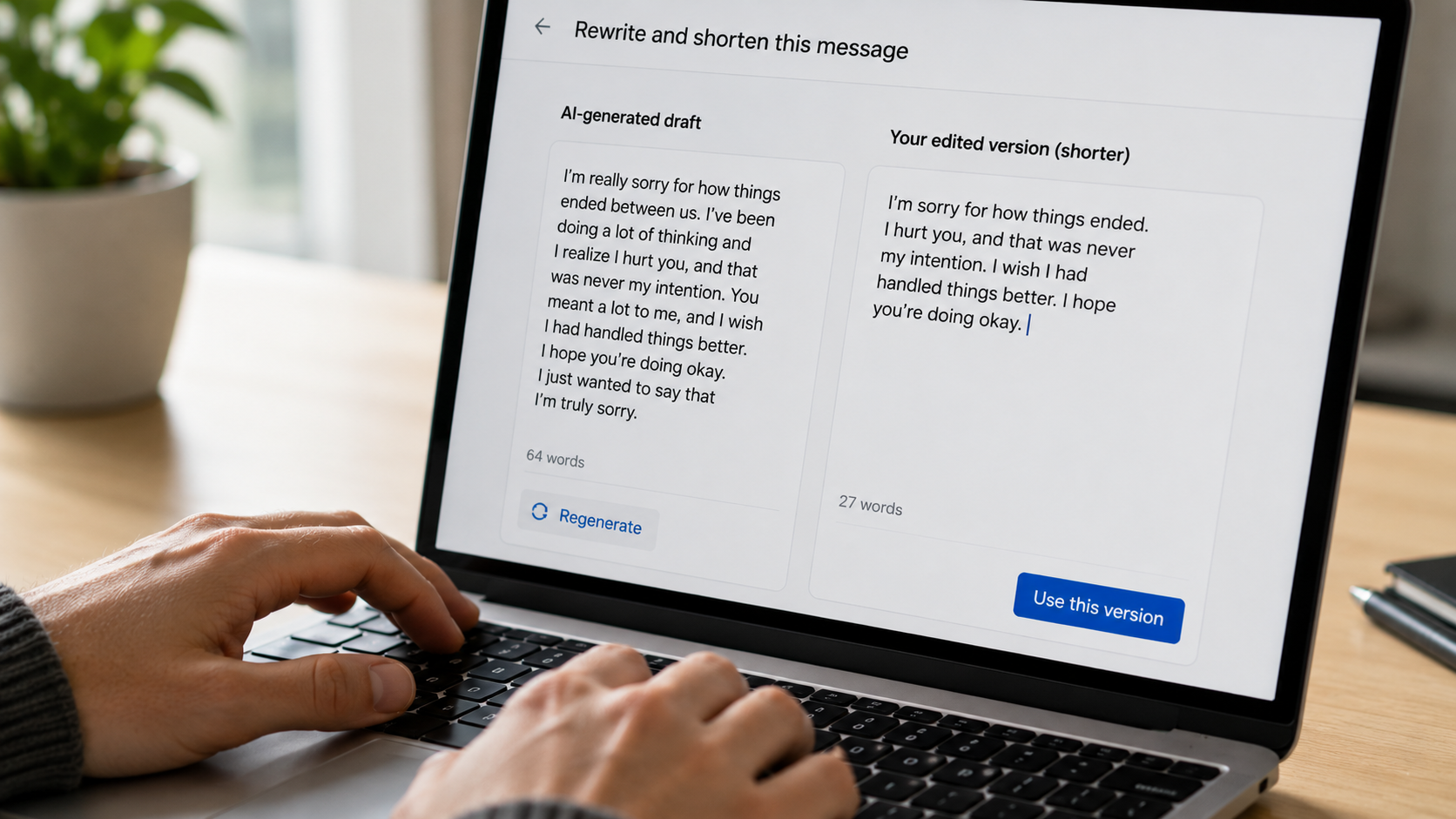
- An apology text.
- A difficult reply to a partner.
- Feedback that needs to sound honest without sounding harsh.
- A message to a parent.
- A resignation note.
People still use AI for these too. Just more carefully.
They generate multiple versions. Sit with them for a while. Delete half the draft. Rewrite certain lines themselves.
Sometimes the AI draft becomes less of a final message and more of a private place to think out loud before saying the real thing.
The pattern shows up in small recognizable moments.
Someone asks AI to write a calm response after an argument, then changes one sentence because “that doesn’t sound like me.”
Someone generates a long birthday message, then cuts it down to three simple lines.
Someone uses AI to untangle what they are feeling, closes the window, then types the final version manually into the chat app anyway.
The hesitation usually does not seem technical.
People already trust AI with client emails, formal requests, performance summaries, travel plans, networking messages, and presentations with barely any second thought.
But emotional messages often trigger a different kind of attention.
People start reading more carefully once the message feels personal.
Not always because the AI output is bad.
Sometimes it sounds almost too smooth.
A message can sound emotionally appropriate while still feeling slightly disconnected from the person sending it.
That tension often appears during editing.
Some people keep the structure but replace phrases with words they would actually say out loud.
Others shorten the message heavily because the polished version feels unnatural to them.
Some intentionally leave small imperfections in the final draft because the cleaner version no longer feels fully recognizable in their own voice.

A slightly awkward sentence can sometimes feel more personal than a perfect one.
The distinction is not always about importance.
A scheduling email can carry responsibility.
An apology can carry vulnerability.
One asks:
“Did I explain this clearly?”
The other quietly asks:
“Does this actually sound like me?”
The boundary also shifts depending on the person and situation.
Some people seem to get more comfortable using AI for emotional writing over time.
Others become more protective of personal language after the novelty wears off.
It is still hard to tell which habits will stick.
What seems to be forming instead is a personal filter around which kinds of language people are comfortable outsourcing and which still feel too emotionally tied to hand over completely.
People already use spellcheck during emotional conversations.
They rewrite texts before sending them.
They ask friends to help draft difficult messages.
Sometimes they type a reply, stare at it, delete it, and start over three times before sending anything at all.
AI may simply be entering an older habit: getting help with language while still wanting the final wording to feel personally recognizable.
What changes is the speed.
Someone can now generate several emotional versions of the same message in less than a minute.
- Gentler.
- Firmer.
- Warmer.
- More distant.
- More understanding.
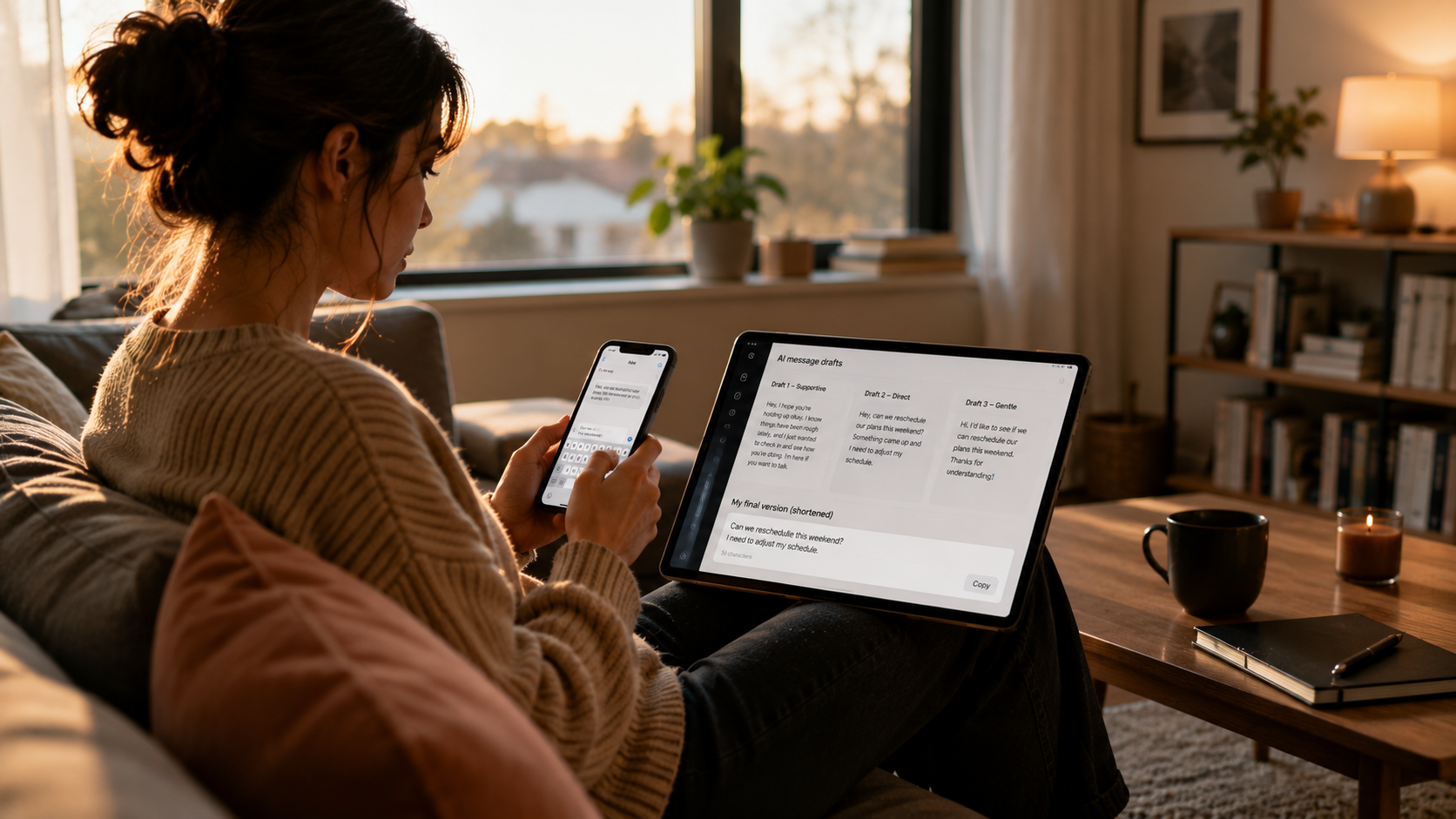
That can make communication easier.
But it can also create a strange kind of uncertainty.
Some people read five different AI-generated versions of a message and end up less sure which one reflects what they actually want to say.
So the final message sometimes becomes smaller.
Shorter.
More manually rewritten.
Not necessarily because the AI failed, but because the sender still wants the wording to feel recognizable before pressing send.