
The Rise of the “Minimum Viable Workday”
Some workers are quietly organizing their jobs around fluctuating energy instead of pretending every day is built for deep focus.
A lot of people still open their laptops in the morning with ambitious plans.
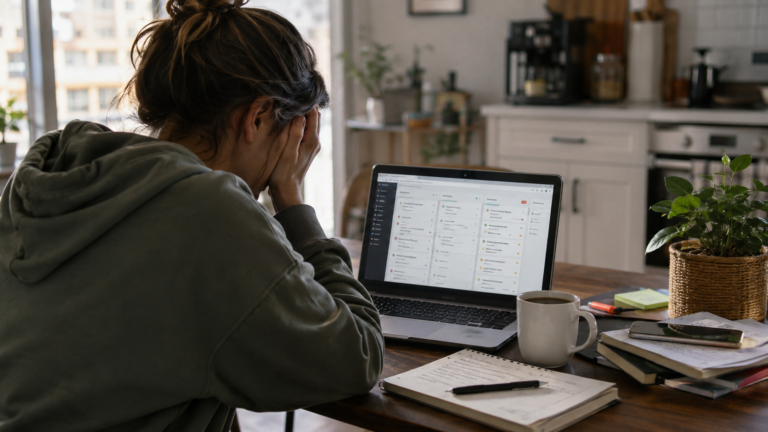
Then around 11:40 a.m., they realize it’s not going to be that kind of day.
The document stays open but untouched. Emails get reread three times. A task that normally takes twenty minutes somehow absorbs an hour.
At some point, some workers stop trying to force deep focus and switch categories entirely.
They move to the “easy tasks” list.
Not procrastination exactly.
More like recognizing the kind of focus they actually have available that day.
Inbox cleanup. Renaming files. Scheduling meetings. Updating documentation. Expense forms. Organizing folders. Formatting slides. Closing tabs that have been open for nine days because dealing with them suddenly feels manageable.
Small tasks that still feel useful when concentration is low.
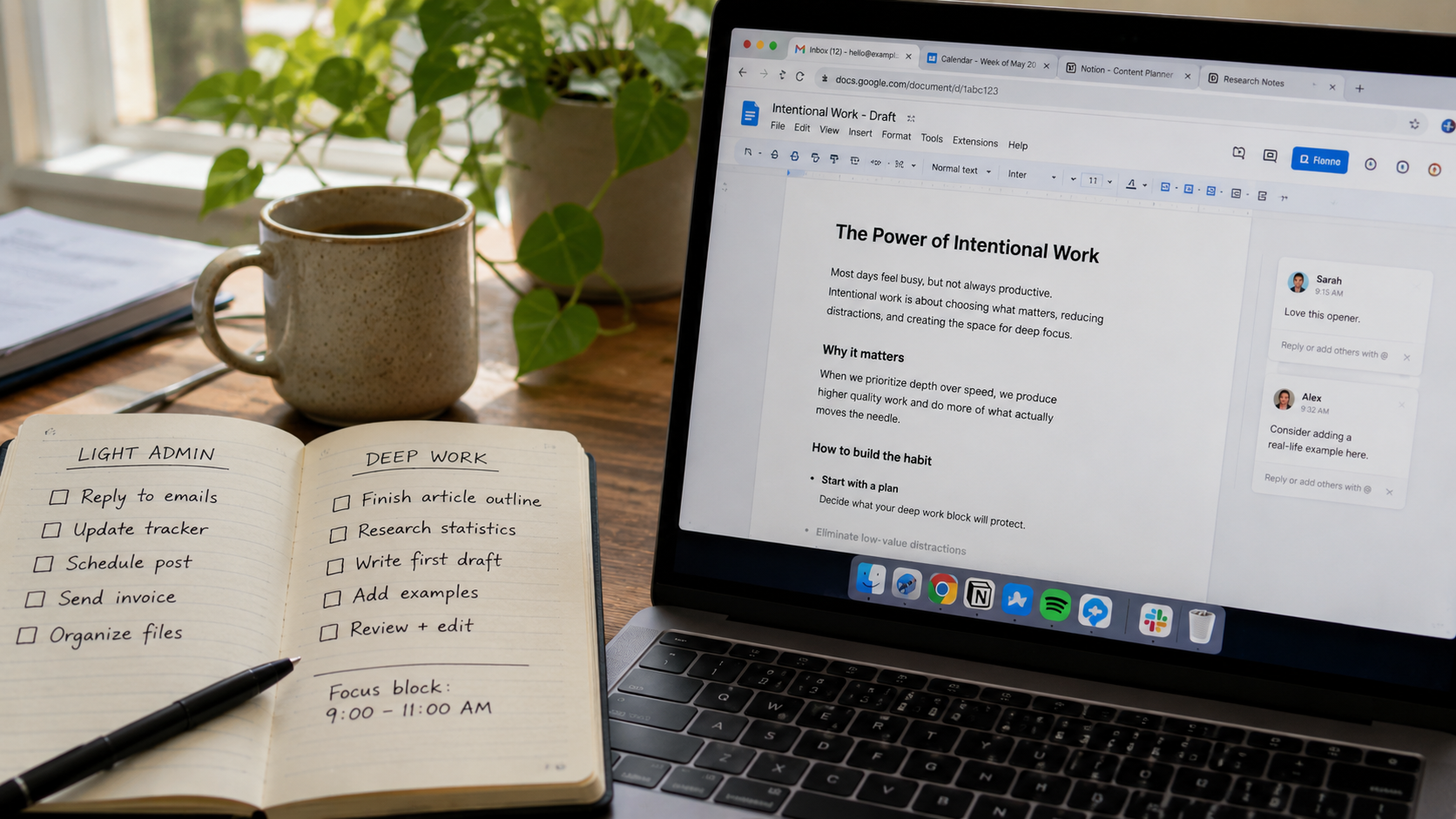
Across productivity apps, notebooks, and personal work systems, workers increasingly describe organizing tasks by mental energy instead of priority alone.
Some keep lists labeled “deep work,” “light admin,” or “brain-off tasks.” Others joke about having a “potato mode” list for afternoons when their attention is mostly gone but they still need to function.
The workflow itself feels ordinary because modern work already contains endless maintenance tasks:
- replying
- organizing
- checking
- updating
- formatting
- documenting
- syncing systems together
Some people intentionally save those tasks for days when focus feels unreliable.
Writing-heavy work, strategic thinking, coding, studying, or difficult conversations get pushed into the hours where their brain feels most usable. Everything else gets grouped separately.
And when the low-energy stretch arrives, they stop fighting it earlier.
You can see this especially clearly in remote work routines.
Someone starts the morning intending to do serious work, realizes after an hour that concentration is not fully there, then quietly switches to admin cleanup instead of spending six miserable hours pretending to focus.
In practice, the behavior looks extremely normal.
A person color-coding spreadsheets because writing feels impossible.
Someone finally organizing their downloads folder during a mentally exhausted afternoon.
A worker scheduling dentist appointments, updating project trackers, and replying to old Slack messages because they already suspect the more demanding task may not happen that day.
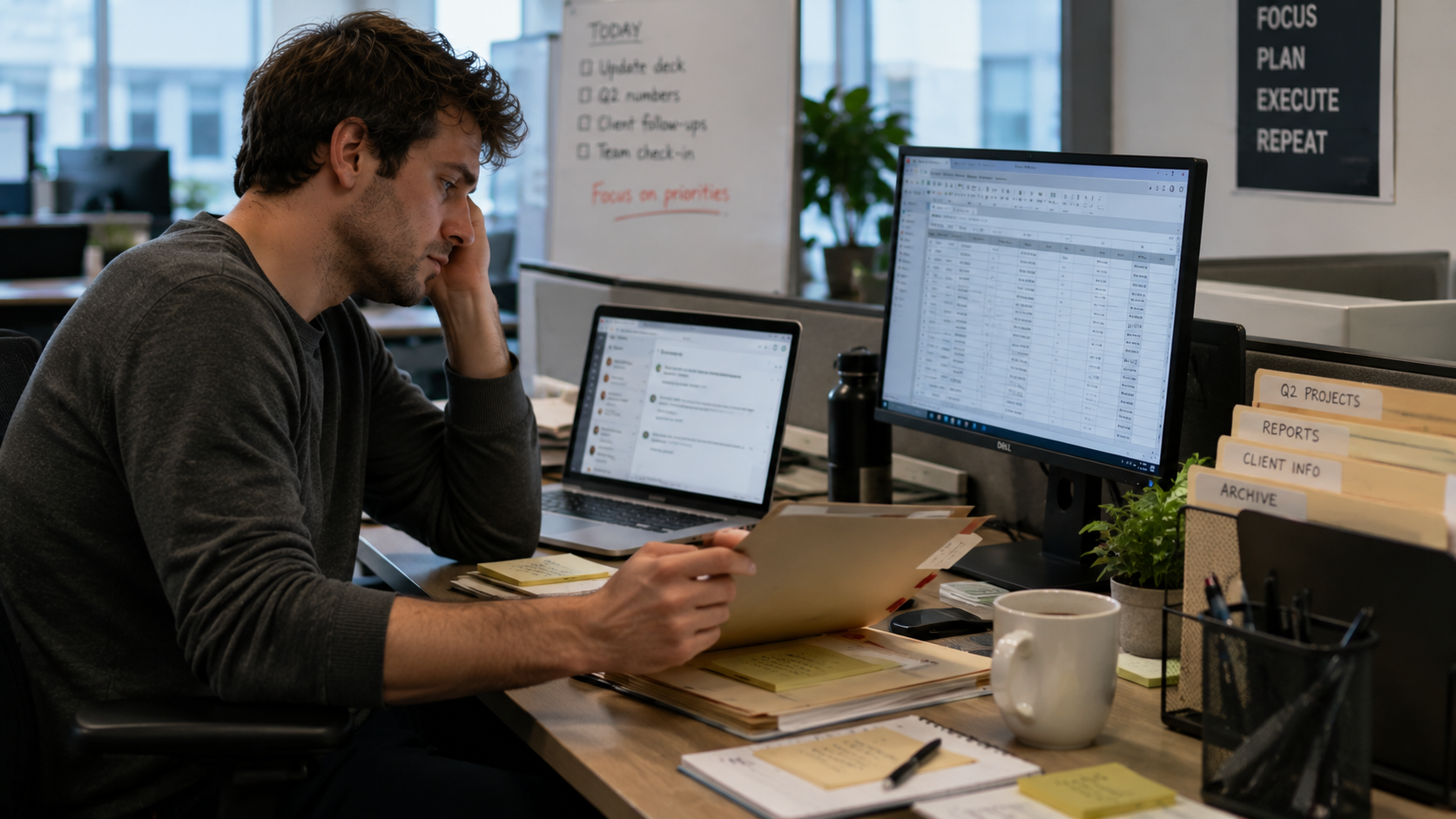
The language around productivity has shifted a little too.
Older productivity culture often treated inconsistent focus like a discipline problem. In some online work spaces now, the language sounds more practical and survival-oriented instead.
People talk about:
- “minimum viable days”
- “low-energy productivity”
- “maintenance mode”
- “easy wins”
- “survival weeks”
The goal is not always maximizing performance.
Sometimes it is simply avoiding a completely wasted day.
Some workers even build fallback systems around the idea. A difficult task gets paired with several easier ones nearby. If concentration disappears halfway through the day, the entire workday does not collapse.
It just downgrades.
A partial day still feels better than a lost one.
The behavior may reflect temporary overload more than a permanent shift. Burnout language, fragmented schedules, constant notifications, and screen fatigue likely all contribute to people feeling mentally inconsistent across the week.
Still, the workflow itself already feels familiar in a lot of online work spaces.
People openly talk about “bad brain days” now in ways they probably would not have a few years ago.
And instead of treating those days like personal failures, some workers are quietly reorganizing their jobs around them.
Mostly through folders, task labels, and a second to-do list called something like:
“If my brain is cooked.”