
From opening multiple tabs to scrolling past polished summaries, many internet users now rely on small verification habits that quietly became part of everyday browsing.
The internet used to feel faster in a different way.
You searched something, clicked a result, and mostly accepted what you found.
Now a lot of people seem to browse with a quieter process running underneath:
“Do I actually trust this?”
You can see it in small habits that feel increasingly normal online.
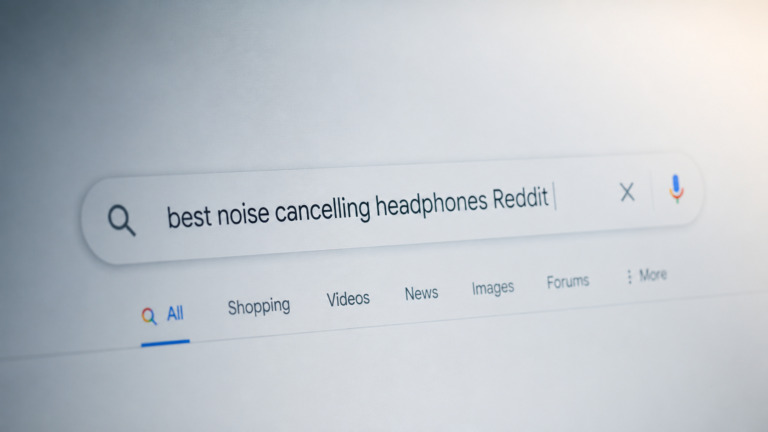
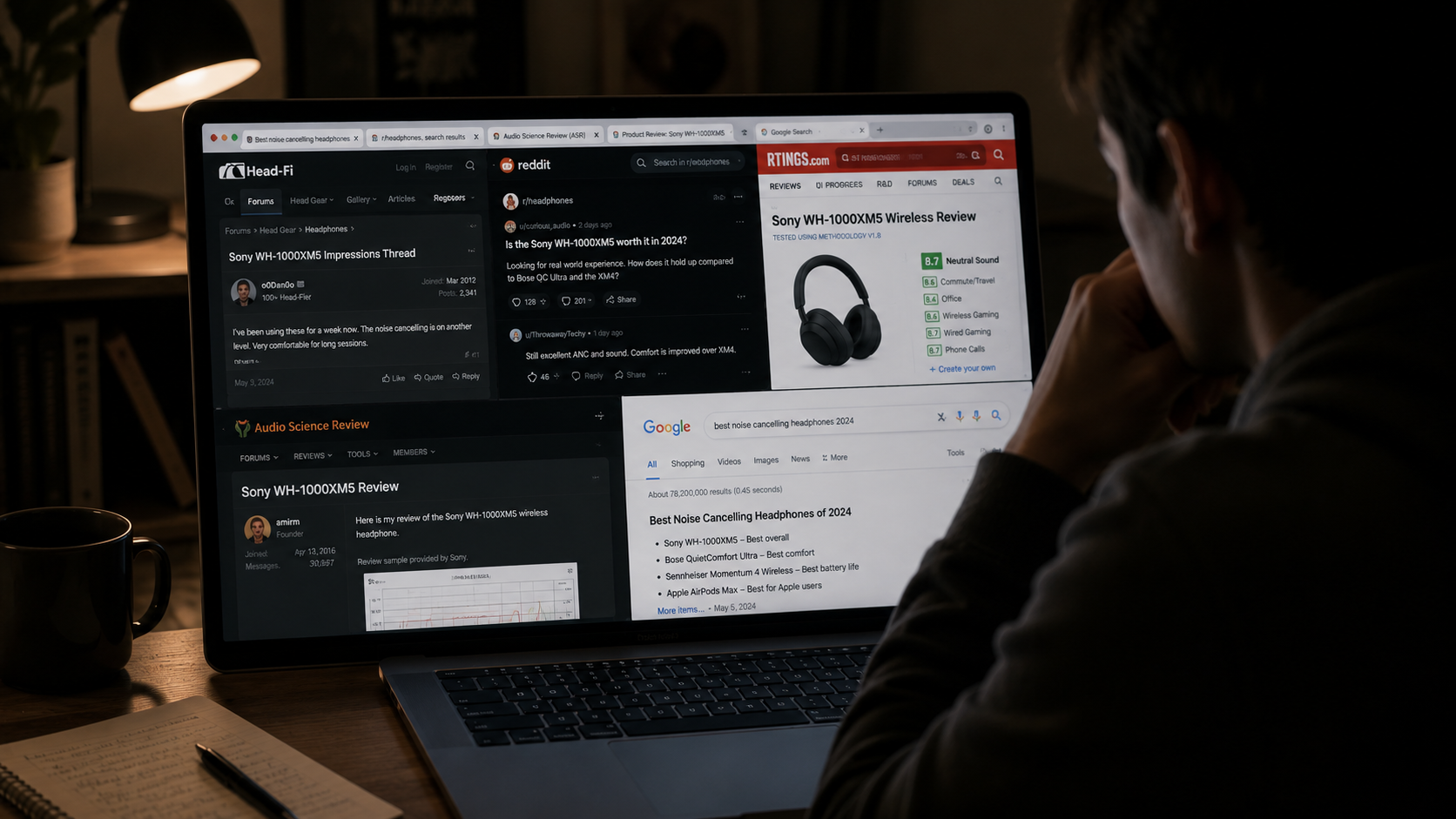
Someone searches for a product, then adds “Reddit” to the query.
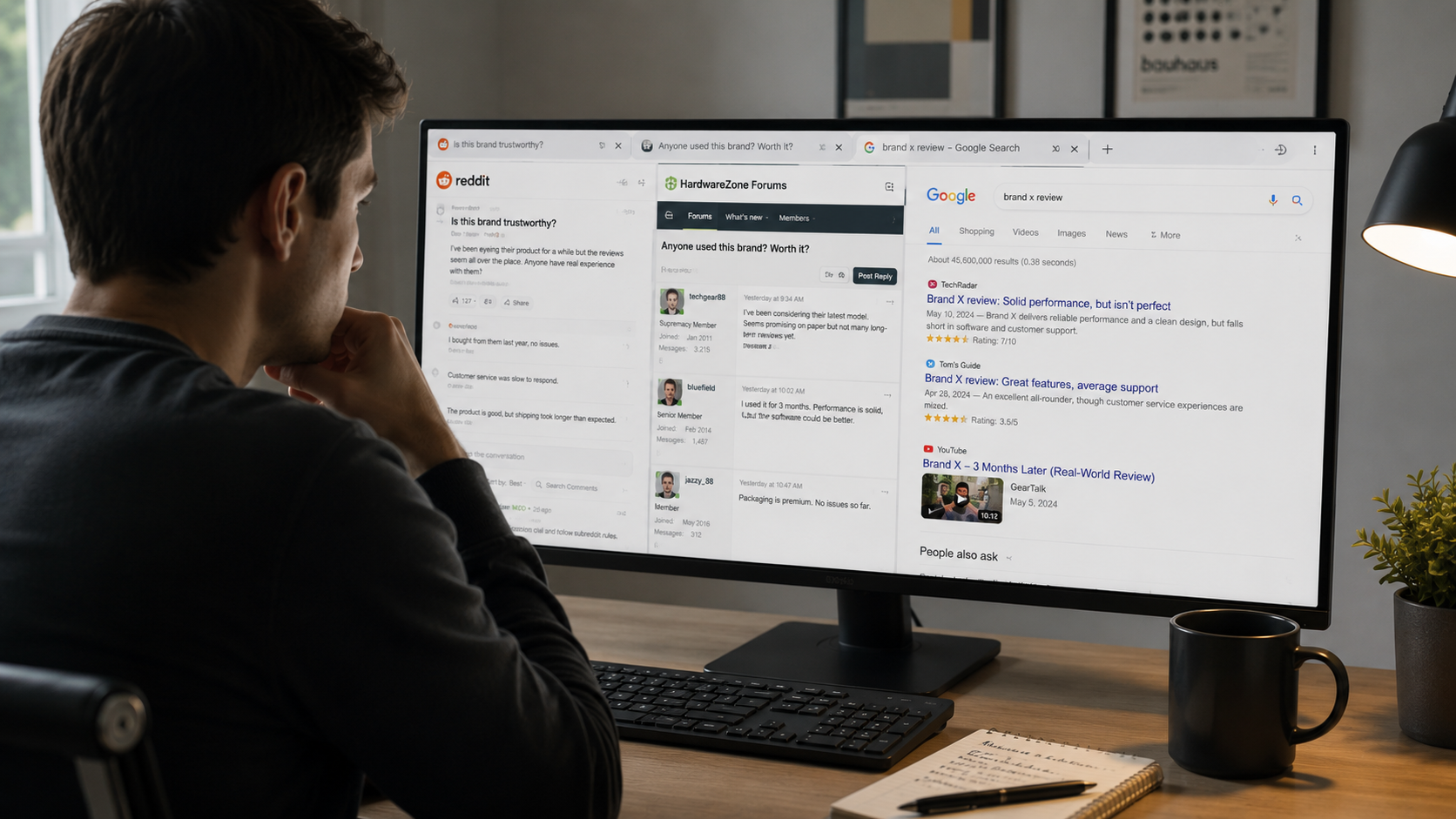
Someone opens multiple tabs before trusting a restaurant review.
Someone watches a viral clip, then checks the comments to see whether it’s edited, old, or missing context.
Someone reads an article that already feels suspicious halfway through because it sounds overly polished or strangely empty.
For some people, this is no longer unusual browsing behavior.
It’s just part of using the internet now.
A person searches for “best office chair,” skips the polished listicles, and looks for forum posts where people complain about the chair after six months.
Someone troubleshooting software scrolls past the AI summaries looking for one comment from a person who had the exact same issue years ago.
Someone looking up a recipe keeps scrolling until the writing sounds like an actual person made the food.
Even ordinary searches now come with small filtering habits attached:
“Reddit.”
“Forum.”
“GitHub.”
“Stack Overflow.”
Specific subreddits.
Specific communities.
Anything that feels a little less flattened.
Some users have also experimented with alternate search tools or tweaks designed to reduce clutter. One example is Google’s &udm=14 parameter, which circulated online partly because it stripped away some AI summaries, shopping modules, and heavier search-page features.
But the larger shift may be less about specific tools and more about browsing behavior itself.
Some people seem to be trying to get closer to information that feels less processed.
Not necessarily expert.
Not perfectly accurate.
Just human enough to trust a little more.
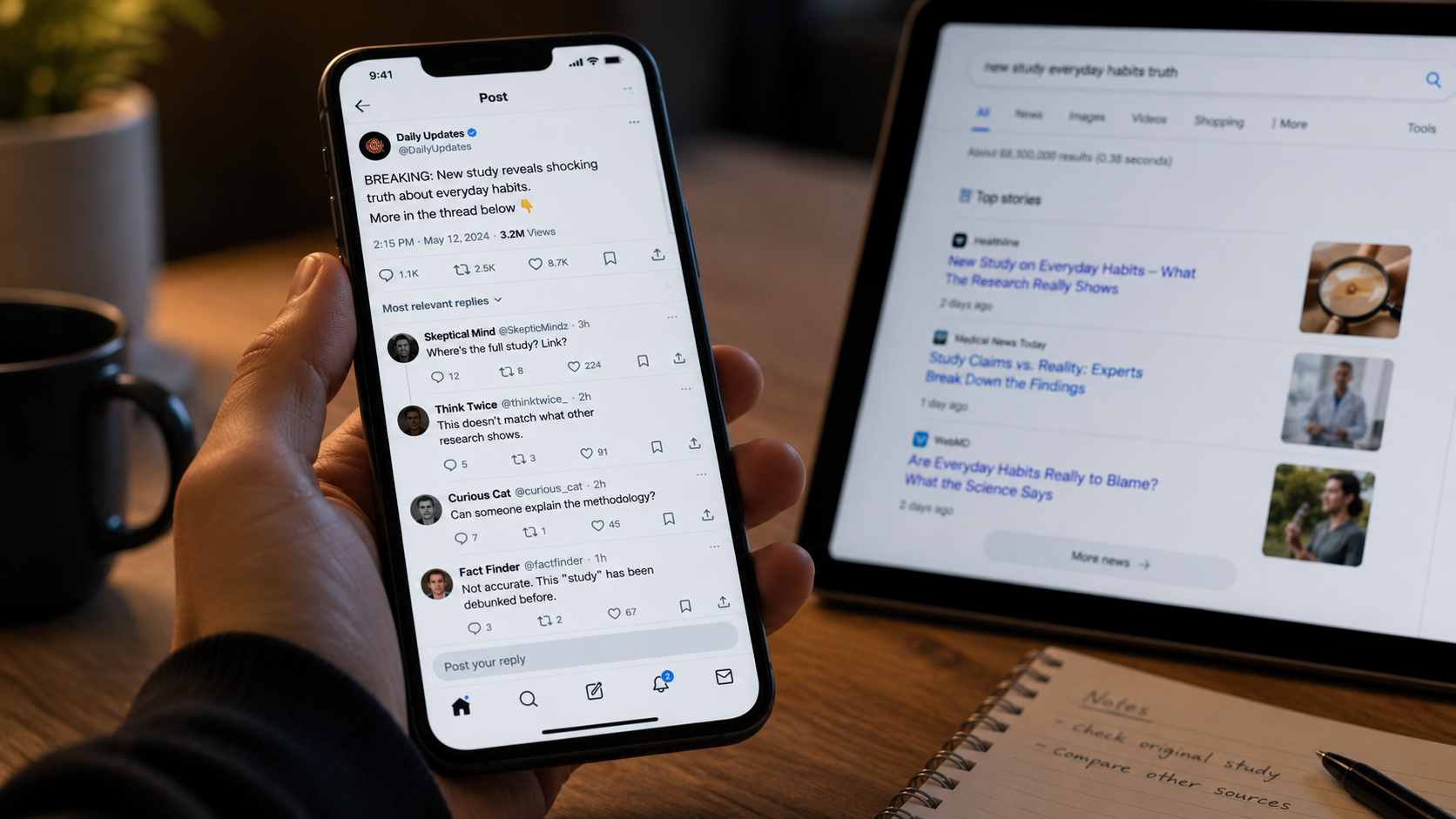
There’s also a growing habit of cross-checking before acting.
People inspect screenshots before sharing them.
They compare reviews across multiple sites.
They search TikTok advice somewhere else before trying it.
Some users even read comment sections differently now. A reply with spelling mistakes and oddly specific details can sometimes feel more believable than a perfectly formatted recommendation.
That does not mean people suddenly trust forums completely. Reddit gets things wrong constantly. Communities become repetitive, biased, or confidently incorrect very quickly.
But visible messiness can sometimes feel more trustworthy than polished certainty.
Especially when the polished version feels optimized for clicks first.
Part of this may not even be skepticism. It may just be fatigue.
Search results today are crowded with SEO pages, affiliate recommendations, reposted answers, AI-written summaries, and content that can sound useful while saying very little.
Most people recognize the feeling immediately.
You click an article that takes 700 words to answer a simple question.
Five review sites recommend the exact same products in the exact same order.
A recipe page starts sounding like it was assembled from other recipe pages.
So people build small verification habits into normal browsing.
- Open more tabs.
- Check dates.
- Read replies.
- Look for disagreement.
- Search the same thing different ways.
The behavior still looks uneven, though.
A lot of people still use AI summaries, top search results, and recommendation feeds without much hesitation. Most users do not want to spend extra time verifying ordinary information during a workday.
And a lot of the time, the fast answer really is good enough.
But among more digitally engaged users, there does seem to be a stronger instinct to separate “content designed to rank” from information that feels more experience-based.
That instinct increasingly shapes how some people search for products, software fixes, restaurants, travel advice, news, and even basic facts.
Not because people expect perfect truth online.
More because browsing the internet now sometimes includes deciding what feels real enough to trust before moving on.