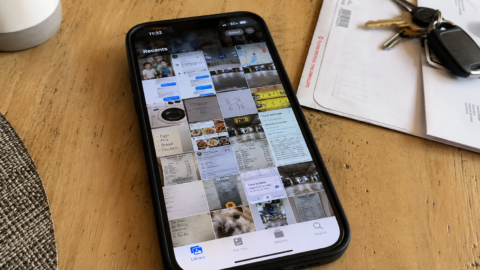

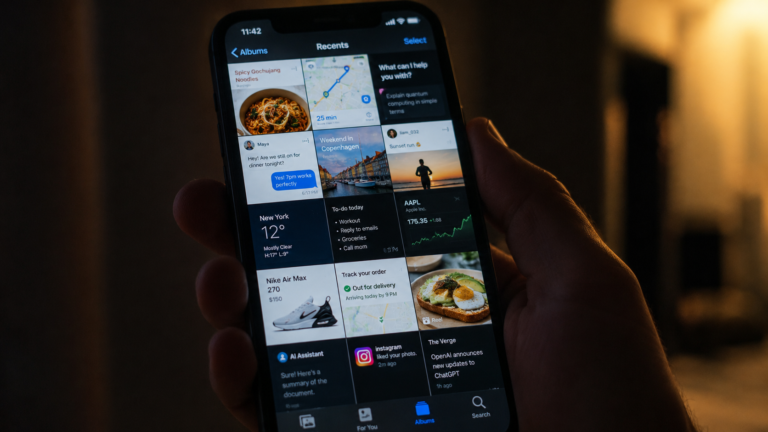
What starts as “I’ll need this later” slowly turns into a mix of reminders, conversations, recipes, directions, old feelings, and fragments of everyday life.
A lot of people now take screenshots the way earlier internet users bookmarked tabs.
Except screenshots are usually faster, messier, and often never revisited.
Someone screenshots a recipe instead of saving the link. A concert date instead of adding it to a calendar. A TikTok comment instead of copying the text. An AI answer instead of opening Notes.
The screenshot becomes the “I’ll deal with this later” button.
And sometimes later never comes.
Many phones now contain screenshot folders filled with things people meant to return to eventually. The folders often function less like organized archives and more like collections of postponed attention.
People capture things quickly because it feels easier than trusting memory, reopening platforms, or trying to remember where something originally appeared.
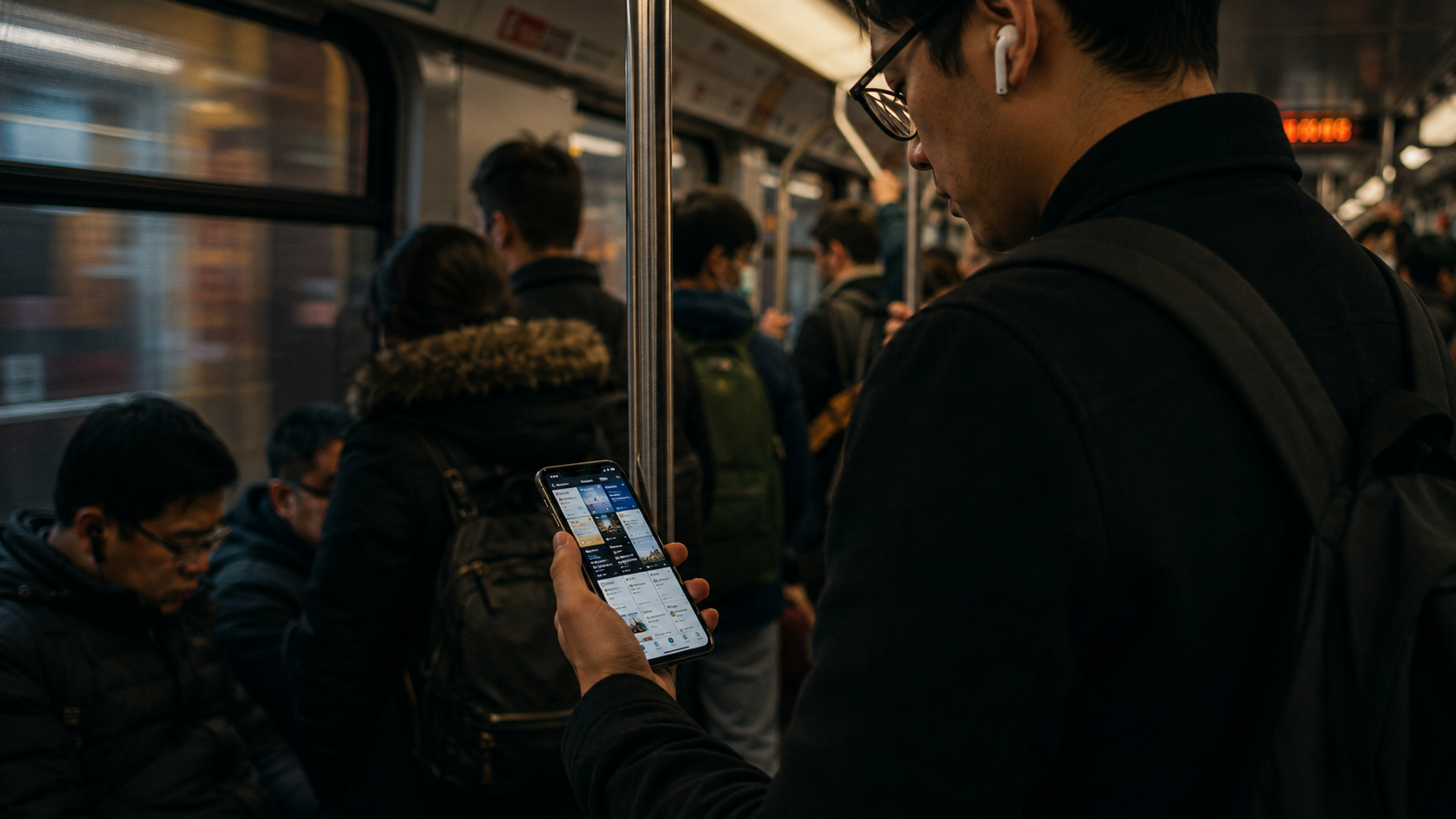
You can see versions of this behavior almost everywhere now.
People screenshot tweets before the timeline moves. They save restaurant recommendations from Instagram Stories because finding the post again later feels annoying. Someone screenshots a map route before going underground. Students screenshot assignment instructions while walking between classes because reopening the portal takes too many steps.
Sometimes people screenshot things while distracted in supermarket lines, during commutes, or between tasks at work because saving something immediately feels easier than remembering it later.
Even temporary emotions get captured this way.
Some people screenshot conversations right after an argument, an apology, or an unexpectedly kind message. Not always to send to someone else. Sometimes just to keep the moment from disappearing too quickly.
A conversation can feel important for a few minutes before it gets buried under delivery updates, spam notifications, memes, and “are you still coming tonight?” texts.
The screenshot briefly holds the feeling in place.
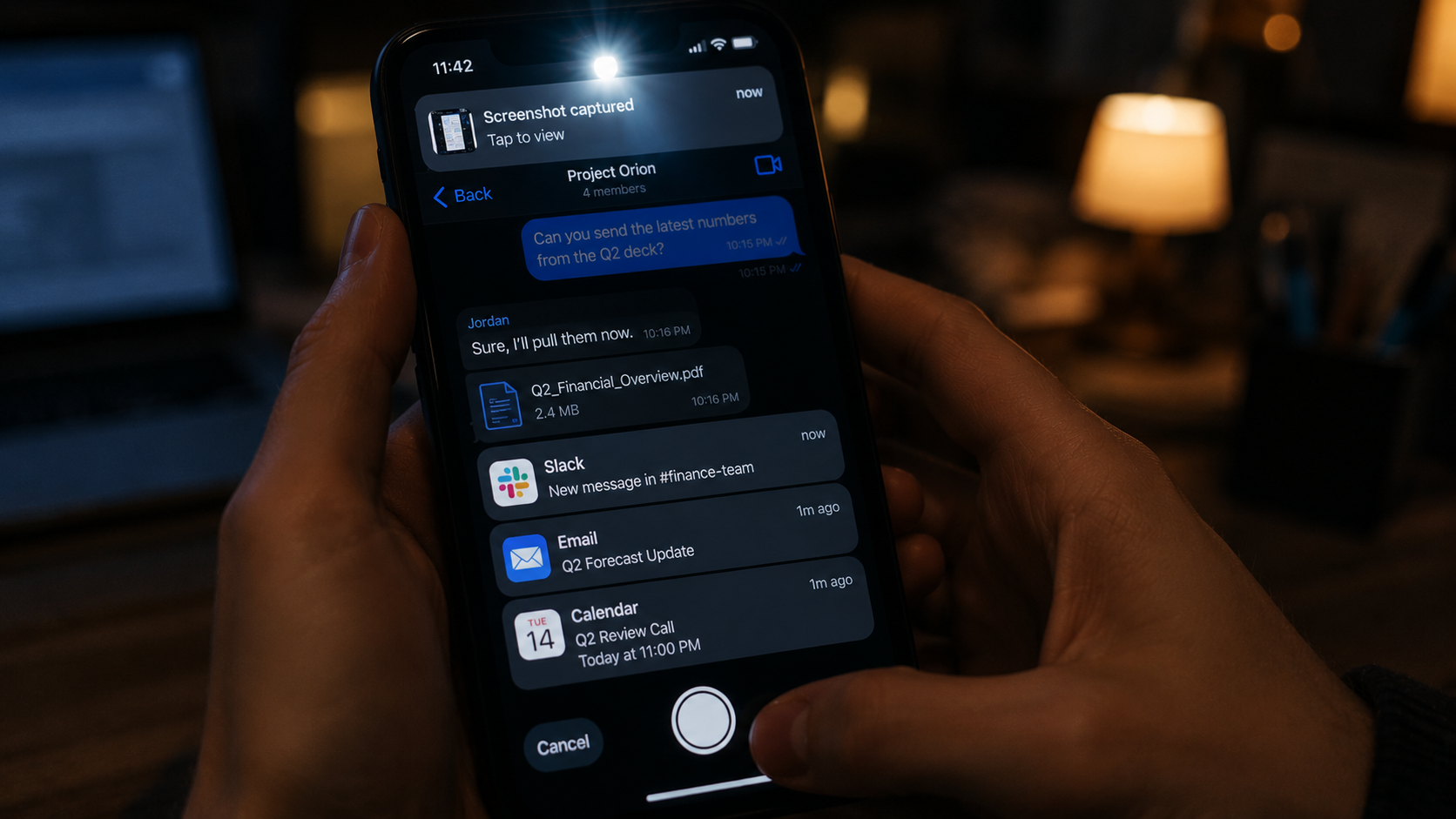
In group chats, screenshots have also become their own form of communication.
Instead of sending links, people often send screenshots of the thing they mean.
A screenshot of a TikTok inside iMessage.
A screenshot of flight details inside WhatsApp.
A screenshot of calendar dates inside Discord.
A screenshot of an Instagram Story sent through Telegram because explaining it would take longer.
Sometimes the screenshot replaces explanation completely.
Part of the appeal is convenience. The sender does not need to summarize anything. The receiver does not need to open another app, wait through loading screens, deal with login problems, or navigate autoplay feeds before reaching the actual information.
The screenshot carries the context with it.
This becomes especially noticeable across apps that do not connect cleanly to each other. Different feeds, different logins, disappearing Stories, recommendation-heavy timelines, links that open in the wrong app.
Sometimes sending a screenshot just feels easier than sending someone into another platform.
There is also very little commitment involved.
Bookmarking something can feel oddly formal, like deciding where information belongs. Properly saving files means naming things, sorting things, organizing things. Even opening a notes app can feel like too much effort when someone is tired or distracted.
A screenshot skips all of that.
Volume Up. Side Button. Done.
The information now feels temporarily safe, even if many people do not seriously expect to organize it later.
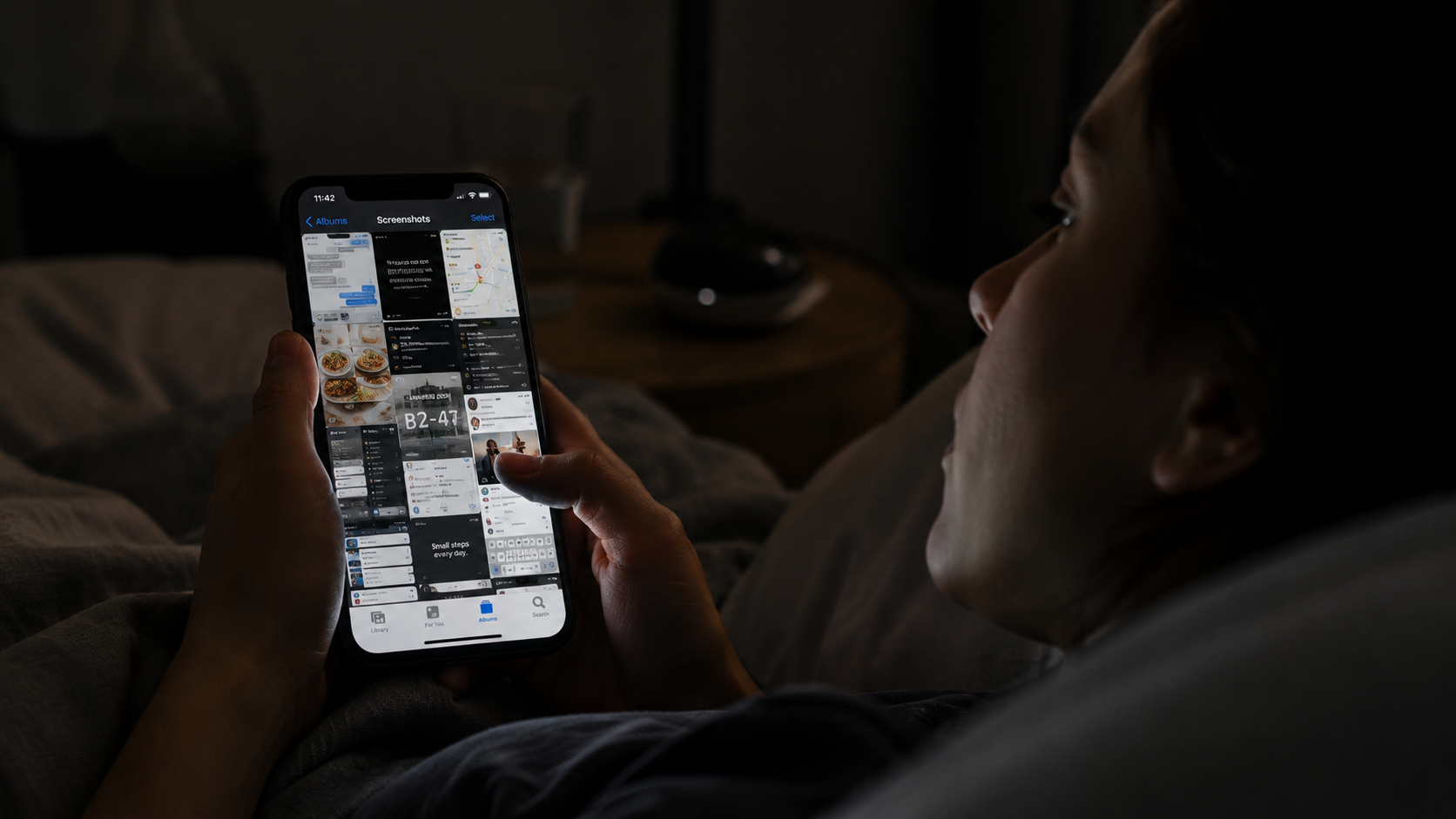
That may help explain why screenshot folders become so large. The goal is not always long-term retrieval. Sometimes people just want brief relief from the feeling that something useful or emotional could disappear before they have time to process it.
Scrolling through old screenshots can feel strangely random:
- a parking spot number
- a recipe never cooked
- a message from someone they no longer talk to
- an AI-generated workout plan
- a screenshot of another screenshot
The folder starts to resemble a timeline of interrupted intentions.
At the same time, screenshots increasingly blur the line between memory storage and communication. In many situations, they have become one of the default ways people move information around.
People send screenshots of things they could easily type out.
Sometimes because it is faster.
Sometimes because it feels more accurate.
Sometimes because nobody wants to rewrite everything manually anymore.
Maybe screenshots are simply the easiest capture tool phones have ever had. Maybe platform search has become frustrating enough that people no longer trust themselves to find things again.
Or maybe modern digital life moves fast enough that people increasingly prefer temporary holding spaces over proper organization.
Either way, the screenshot folder keeps growing.